
Terror in the “Breadbasket of Europe”
- Nostalgic Reader

- Jan 21, 2023
- 5 min read
Updated: Jan 25, 2023
5 Books Chronicling Ukraine’s Troubled History with Russia

I have been interested in Ukrainian history since my first childhood viewing of the musical film Fiddler on the Roof, which is set in the Russian Pale of Settlement. It has only been in more recent years, however, that I have truly come to understand how Ukraine, though part of the Russian Empire for centuries, has been a separate nation with its own identity.
Since the commencement of last year’s Russian invasion of Ukraine, the Eastern European country has constantly been in the news. Possibly your interest in the country’s turbulent history may have been piqued. If it has, and you’re curious to learn more, the following list includes five books – two non-fictional, three fictional – about Ukraine, its people, and its unrelenting ties to Russia.

1 | Borderland: A Journey Through the History of Ukraine Anna Reid
Author Anna Reid lays out a compelling narrative of events akin to a travelogue detailing Ukraine’s history and geography from the Kievan Rus and Mongol invasions of the Middle Ages to the Russian Civil War of 1918–1920 and Nazi occupation during WWII. She includes accounts of her own experiences and encounters as a journalist with the country’s people who have struggled to develop a national identity apart from neighbor and long-time adversary, Russia. A must-read for anyone interested in a broad overview of Ukrainian history.
Nations with vast resources have often been the source of great upheaval throughout history, and Ukraine is no exception. Nicknamed “The Breadbasket of Europe” for its rich, fertile soil, the country has been the target of many invasions over the centuries. I found this book’s account of events quite interesting, though what stood out to me were the author’s personal anecdotes. Her conversations with locals reveal the general sentiment of the Ukrainian people and a dark sense of humor and indifference bred from generations of hardships.
My Goodreads Rating: 4 Stars
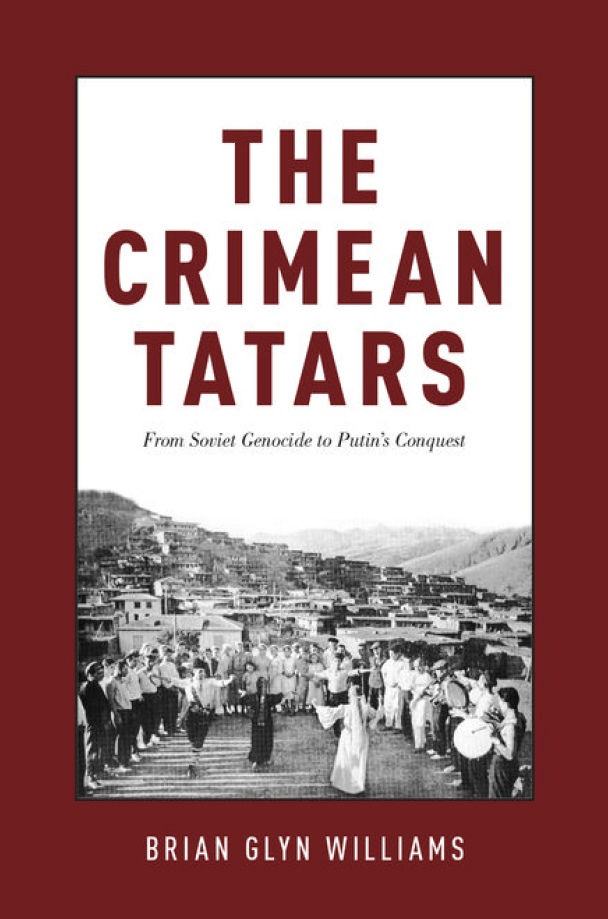
2 | The Crimean Tatars: From Soviet Genocide to Putin’s Conquest Brian Glyn Williams
This nonfiction book focuses on the Muslim people group of Turkish descent called the Tatars. They are indigenous to the Ukrainian peninsula of Crimea situated on the Black Sea. You may have seen or heard the Tatars referred to as “Tartars” – a term so widely, though erroneously, used that it has become accepted as a legitimate alternate version of the word. Following Russia’s annexation of the Crimea in 1783 under Catherine the Great, many devout, conservative Muslim Tatars fled to Turkey to avoid Russification and to maintain their Islamic practices. In 1944, Stalin ordered the mass expulsion of Tatars from the peninsula under the pretense that the people were Nazi collaborators. The real motive behind the forced migration (primarily to Uzbekistan) was an ethnic purge of Russian territory, and the result was a cultural genocide, largely unacknowledged today. Many Tatars and their descendants have since returned to Crimea, their ancestral homeland, following the collapse of the Soviet Union only to meet obstacles in attempts reclaim their family’s land. This book is a tragic look at the Crimean Tatar diaspora and an eye-opening example of how the Soviet Union systematically eliminated any perceived unsavory ethnic or religious group.
My Goodreads Rating: 4 Stars
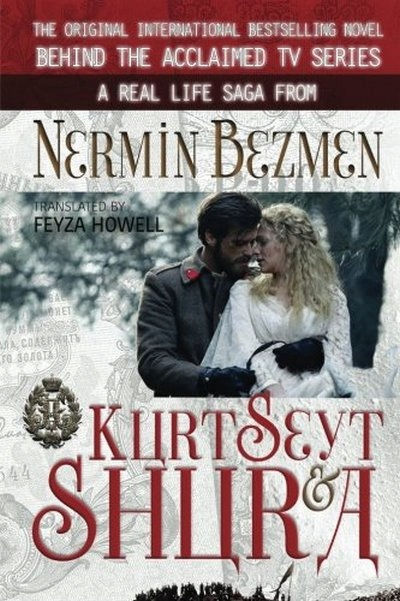
3 | Kurt Seyt & Shura Nermin Bezmin
Translated by Feyza Howell
An English translation of the Turkish novel which inspired the lavish Turkish television series Kurt Seyit ve Ȿura (one of my favorite shows of all time!), this fictionalized narrative recounts the life of the author’s grandfather from his time in military service during WWI, through his escape to his hometown of Alushta in the Crimea during the Russian Revolution, to his subsequent emigration to Turkey at the dawn of it War of Independence.
The titular character Seyt Eminoff, both fictional and real-life, grew up in the Muslim Tatar community of the Crimean peninsula. His family were wealthy landowners. Like his father before him, he serves as an Imperial Guard to the Russian Tsar, Nicholas II. While on leave during the first world war in 1916, he attends a ball in Moscow and meets a Russian aristocratic girl, Shura. After the fall of the Romanov dynasty and the beginning of the Russian Revolution, Seyt and Shura flee to his family estate in the Crimea ̶̶ evading the slaughter that awaits his family at the hands of Bolsheviks ̶̶ and eventually make their way to Istanbul, Turkey to avoid persecution. This sweeping tale of star-crossed lovers from two different cultures set against the backdrop of war and revolution is romantic, captivating, and heartbreaking. I enjoyed the TV series more than the book, but I appreciate the latter as the source of inspiration, as well as the additional details not included on screen. Subsequent books in the series have not been translated into English. Have I contemplated learning Turkish just so I could read them? Yes, but only fleetingly.
My Goodreads Rating: 3 Stars

4 | The Memory Keeper of Kyiv Erin Litteken
This fictional novel is set in a dual timeline, one during the early 2000s in the United States, the other during the real-life Holodomor, the Soviet-manufactured famine of 1932–1933, which killed nearly 10 million Ukrainians. Under Stalin’s communist regime, Ukraine was forced into a collective farming system which robbed the people of the crops they grew, slowly starving them to death. Dissenters of communist ideology were murdered or sent off to prison camps (gulags) in Siberia.
The “present day” storyline featuring the main character’s granddaughter during the 2000s didn’t really work for me. I didn’t connect with the characters or find them particularly believable. I wish this novel had been set solely during the 1930s and followed the same protagonist, maybe with a present-day epilogue. The historical storyline – a heartbreaking yet redemptive tale of one family’s love, loss, and survival during the famine – was the heart of the story for me and made this novel a worthwhile read.
My Goodreads Rating: 4 Stars

5 | The Little Russian Susan Sherman
The title of this fictional novel refers to the derogatory term for Ukraine, “Little Russia.” Centered around the Jewish community of the Pale of Settlement, this book explores the discrimination and violence Jews faced under the Russian Empire in the early twentieth century. While I didn’t find any of the characters especially likeable, I was compelled by the themes and events and the hard life lessons learned by the characters of this eternally persecuted ethnoreligious group of people. Many Jews were inspired by the communist promise of equality to take part in the Russian Revolution, only to learn that they would never be truly accepted anywhere after being subjected to more pogroms reminiscent of those that were carried out under the tsar they helped to overthrow. Though the characters may leave you cold, the historical content of this novel is important in understanding the tragic plight of the Jewish people under Russian rule.
My Goodreads Rating: 3 Stars


Comments