
Remembering the Holocaust
- Nostalgic Reader

- Jul 6, 2024
- 9 min read
6 Books Chronicling the Genocide of Six Million Jews During World War II
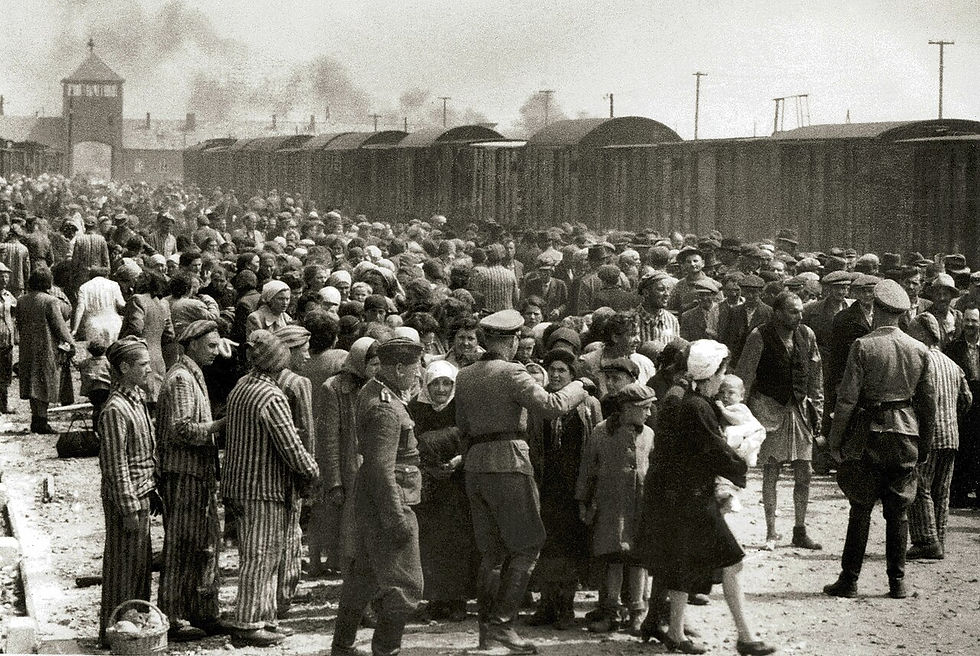
Selection on the ramp at Auschwitz-Birkenau, 1944
Before the standard middle school assigned reading of The Diary of Anne Frank, I stumbled upon the Holocaust at a Scholastic book fair in the fifth grade, a year fraught with personal angst which would lead me in a literary trajectory of fascination with war, strife, and tragedy throughout history. The first Holocaust story I read was Torn Thread by Anne Isaacs, a novel based on the true story of a twelve-year-old Jewish girl in Poland who was forced to work at a factory in a labor camp, spinning thread on dangerous machines to manufacture clothing and blankets for the German army. Once immersed in this not-so-distant past world of persecution and suffering, I spent the subsequent few years reading every book on the subject I could get my hands on.
In this post, I will skip over the dozens of books I read in my adolescence and focus solely on reviewing those I have read in the past year. Whatever the reader’s personal views and sympathies, in light of the recent and ongoing events in Israel, it is imperative now more than ever to revisit the atrocities of the Holocaust to understand how it came to fruition, the devastating loss of human life, and the resolution of the Western world that the Jewish people needed an officially-recognized homeland to prevent such a horrific genocide from occurring ever again.

1 | Within These Walls of Sorrow: A Novel of World War II Poland Amanda Barratt
Following the 1939 Nazi invasion of Poland, two neighbors living in Kraków are faced with hardship during their country’s occupation. Hania, a young Jewish woman, and her family are forced to move into the ghetto along with their fellow Jews. There, they are subjected to appalling living conditions and constantly threatened with deportation to work camps or execution. Zosia, a widowed Polish woman, works as a pharmacist in the only gentile pharmacy allowed in the ghetto. She and her fellow workers defy the Nazi authorities by providing aid to those inside and hiding people they’ve helped smuggle out. With each passing year, the situation inside the ghetto grows more dangerous as the Nazis pursue their quest to exterminate the Jewish race.
This novel is an emotionally heavy and heartbreaking fictional account of the Jews’ plight for survival during the Holocaust in Poland and of the gentile Poles who risked their lives to help them. Well-researched, the author includes the real-life Apteka Pod Orłem pharmacy and a few of the actual pharmacists in her narrative and depicts scenes witnessed by those people. Initially, I felt the fictional characters were rather flat. They seemed to all be generic “good people” to whom bad things were happening. After I delved deeper into the story, my opinion changed as the characters were fleshed out more and tested by unimaginable persecution and tragedy. By the end, I felt compelled to give this haunting novel five stars for the author’s realistic portrayal of the atrocities committed against the Jewish people and their inspiring endurance throughout this dark period of history.
My Goodreads Rating: 5 Stars

2 | Schindler’s List Thomas Keneally
German businessman and opportunist Oskar Schindler arrives in Nazi-occupied Kraków, Poland to open an enamel factory and profit financially from the situation he finds there. He buys a vacant factory and recruits a labor force from among the Jews confined in the newly established ghetto. Schindler witnesses with growing alarm how terribly the Jewish people are treated by their captors. As the ghetto is liquidated and all the surviving Jews are sent off to labor and death camps, Schindler becomes more preoccupied with shielding his workers from such fates than with making money. He has a barracks constructed specifically for his Jewish workers so they may live well-fed and free from beatings. When the SS demands the factory be shut down, Schindler devises a way to open a new factory in Moravia, Czechoslovakia and bring as many workers with him as possible. He no longer cares about production or profit. His only goal is to save lives. Making the cut onto Schindler’s list of workers means the difference between life and death.
This book should have been a work of nonfiction. It baffles me why the author chose to fictionalize this true story into a novel. His intent in writing was to remain as faithful to the testimonies of the real-life Schindlerjuden (Schindler’s Jews) as possible, to the point where he neglected to weave any sort of narrative between the myriad anecdotes of the various survivors, or the other characters involved. A scarce amount of dialogue is present in this so-called novel, presumably only what exists on record as having been spoken. In the realm of fiction, authors are free to take artistic license to embellish, add, or change details. My impression is Keneally avoided doing so to the detriment of the narrative. Writing a nonfictional account would have solidified my understanding that the facts presented are indeed facts and not fictionalized in any way. Marketing this as a novel leaves room to doubt the truth in all the information presented.
This criticism aside, the book itself is a fascinating tale of an atypical hero in Oskar Schindler, a war profiteer and serial philanderer, who saved more Jews during the Holocaust than any other single person. Schindler had no prior track record as a champion for human rights or the Jewish people. He was an ordinary, flawed man who simply witnessed fellow human beings wrongfully treated and who sacrificed everything he had to manipulate and stand up to the corrupt system in power to preserve the lives of 1,200 people.
The 1993 Oscar-winning film Schindler’s List is a largely faithful adaptation of the novel. While it is helpful to have working knowledge of the source material when identifying various characters, the film does a better job, in my opinion, of weaving together the stories of the survivors into a cohesive narrative.
My Goodreads Rating: 4 Stars

3 | Night Elie Wiesel
Fifteen-year-old Eliezer, a Hungarian Jew, waits out most of the Second World War oblivious to the horrors being perpetrated on his people throughout the rest of Europe. In 1944, as the Germans march on Budapest, rumors have reached his hometown in Sighet, but no one believes it is possible such atrocities are being committed. So, they wait. As the Germans occupy the town, Elie’s family are forced to move to a ghetto. Despite opportunities to flee, they are still convinced the situation cannot get any worse. They are woefully mistaken and soon are shipped off in crowded cattle cars to Auschwitz.
This classic account of author Elie Wiesel’s survival of multiple concentration camps during the last two years of the war serves as a warning to future generations the limitless depth of evil humanity is capable of perpetuating. Wiesel witnessed untold horrors that broke his spirit and left him forever scarred. His objective in writing this haunting memoir was to leave a written record of his experiences that should never be forgotten or erased from history, lest it should repeat itself.
My Goodreads Rating: 5 Stars

4 | The Tattooist of Auschwitz Heather Morris
In April of 1942, twenty-five-year-old Lale Eisenberg, a Slovakian Jew, is transported to Auschwitz-Birkenau. His fluency in multiple languages and the sympathy of the current tattooist win him the job of Tätowierer for the infamous concentration camp. While marking a new transport of female prisoners with their assigned numbers, he meets Gita, who will become the love of his life. Utilizing his privileged position and charming personality, Lale devises a system of smuggling food and medicine into the camp to help keep his fellow prisoners alive. However, his scheme can only continue for so long before he is caught, and he must face the consequences of his deception.
I found this fictionalized account the true story of Lale’s life at Auschwitz-Birkenau intriguing in terms of his extraordinary experience compared to most prisoners. He was an opportunistic risk-taker determined to survive, despite the possibility of being named a Nazi-collaborator in the aftermath of the war. The novel is promoted as “based on the powerful true story of love and survival.” Unfortunately, I did not connect with the love story between Lale and Gita. Had I not known the novel was about real people, I would have dismissed the romance as overwrought nonsense. Gita was an underdeveloped character in whom I had little emotional investment. I had a better sense of who the camp prison guard Baretski was as a character and was more interested in Lale’s odd relationship with him than with Gita. I also found it rather jarring when the author randomly inserted scenes from other characters’ perspectives. The story belongs to Lale alone – gathered by the author from his real-life, first-hand testimony – and should have remained so.
My Goodreads Rating: 4 Stars

5 | The Bielski Brothers: The True Story of Three Men Who Defied the Nazis, Saved 1,200 Jews, and Built a Village in the Forest
Peter Duffy
In rural Belarus, a country whose ruling powers have changed hands from Poland to Soviet Russia, is now occupied by the Nazis following the German invasion of the Soviet Union in 1941. Three Jewish brothers live in defiance of the increasing oppression of Belarussian Jews, refusing to comply with Nazi orders. After the murder of their parents, the Bielski brothers gather their extended family and flee to the forest, where they form a partisan militia to fight the German army. As more and more Jews are rounded up, forced into ghettos, and deported to concentration camps, the Bielski brothers shelter more refugees until their numbers swell to roughly one thousand people of all ages. They live as nomads, venturing from one part of the forest to another, constantly dodging the Nazis, who are determined to hunt them down and exterminate them.
This nonfictional account of the trio of brothers who outwitted the Nazis and preserved the lives of over one thousand fellow Jews was completely unfamiliar to me despite my twenty year-long interest in the Holocaust. This book is a fascinating look at an extraordinary group of people who, rather than passively await the fate the Nazi regime had meted out for them, chose to fight back. Tuvia, Zus, and Asael Bielski were undoubtedly heroes. Yet the author did not shy away from acknowledging the men’s flaws and the harsh conditions they imposed to maintain the order among their ranks necessary to keep everyone alive. They were imperfect humans who rose to the occasion in a time of chaos, betrayal, and tragedy to take on leadership roles and give their people a sanctuary and hope for a life beyond the war.
My Goodreads Rating: 5 Stars
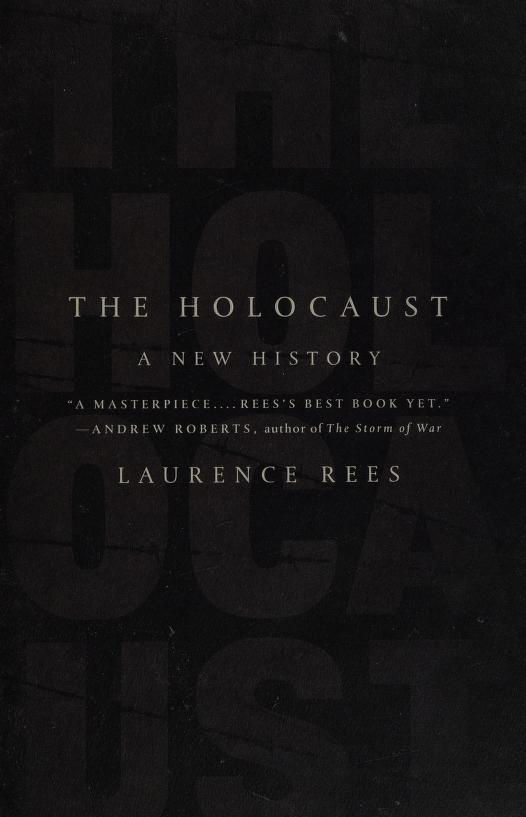
6 | The Holocaust: A New History Laurence Rees
Laurence Rees, filmmaker and former head of BBC TV History, presents a comprehensive, chronological record of the Holocaust from its inception through its aftermath, drawing on twenty-five years of research and countless first-hand testimonies of survivors, witnesses, and perpetrators. This nonfictional tome is a paramount work of scholarship that analyzes how this terrible atrocity was allowed to happen.
Unlike previous books I have read about the Holocaust – mostly memoirs or biographies detailing survivors’ individual experiences – The Holocaust: A New History delves into the root causes of the Nazi extermination of millions of Jews, Slavs, disabled people, and others deemed undesirable. Concentration camps and gas chambers were not built overnight after a solitary decision to carry out the evils acts of what would become known as the Holocaust. Rees describes the step-by-step process of how Germany and many of its fellow European nations went from being subtly antisemitic to openly discriminatory to willingly complicit in mass deportations and executions within a mere few years.
Expulsion of the Jews in some manner was always a goal of Hitler’s Third Reich. Germany used the failed Evian conference of 1937 – a world gathering of nations concerned about the persecution of Jews which resulted in not a single nation save the Dominican Republic willing to take in Jewish refugees – as an excuse to embark on another method of eliminating the Jews. The Nazis practiced mass execution techniques first on the mentally and physically disabled, beginning with lethal injections and later developing gas chambers. The infamous gas chambers were devised not simply to kill more people efficiently, but to make it psychologically easier on the executioners who no longer had to look their victims in the eye. However, several Nazis intimately involved in the killing process purportedly enjoyed their work.
Some Nazi-occupied countries resisted pressure to deport Jews to death camps – among them Denmark, Finland, and, oddly enough, Germany’s ally and co-belligerent Italy prior to its withdrawal from the war in 1943. Sadly, many others such as France and the Netherlands (nations which had no previous overt history of antisemitism) gladly handed over their Jewish population to be slaughtered when presented with the opportunity. A second world conference was called after confirmation that people were being murdered en masse in concentration camps. Despite the general condemnation of Germany’s actions, still no country was willing to save Jewish lives by accepting refugees. Even when the war in Europe seemed lost, the Nazis increased their killings of Jews, for it was the only war they felt they could win: the annihilation of an entire race of people.
This is not a book one reads for enjoyment, but out of social responsibility and self-education. I was often angry and disgusted while reading this book. The horrific details can be hard to swallow, but it is important to understand this crucial, occasionally denied chapter of twentieth century history. While I would like to be optimistic that such a crime could never be enacted again, I see the cogs in place for atrocities of a similar nature to occur in the not-so-distant future.
My Goodreads Rating: 5 Stars

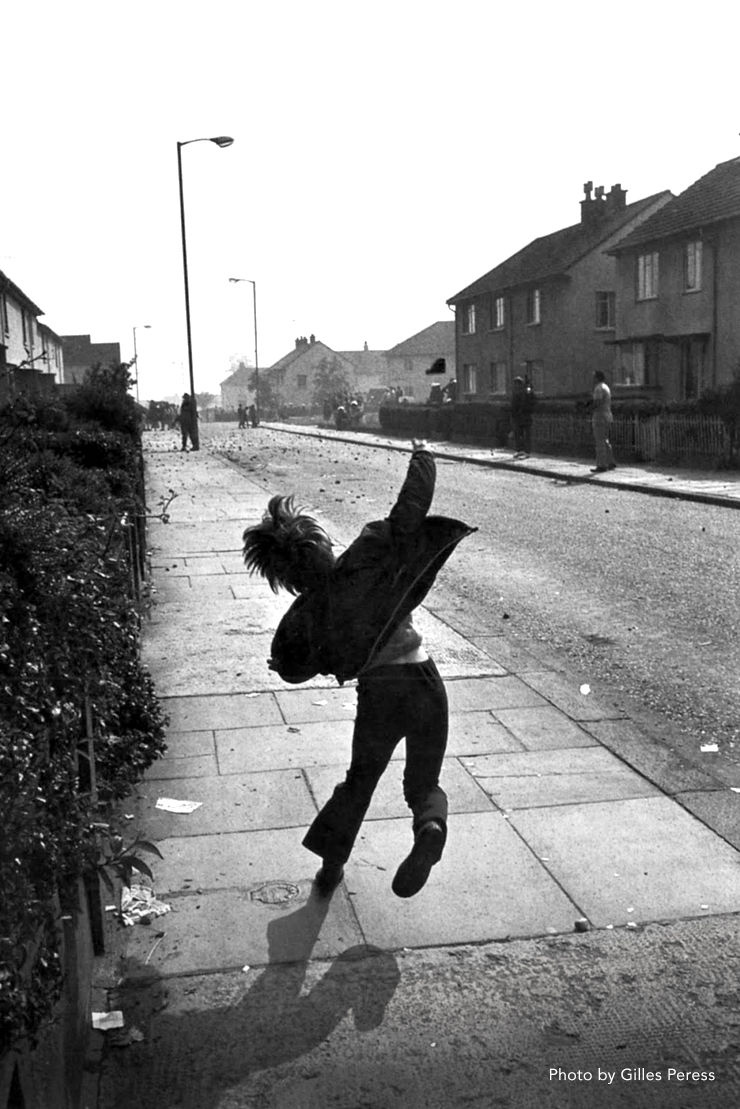

As Nobel Peace Prize recipient (1984) said so succinctly: "If you are neutral in situations of injustice, you have chosen the side of the oppressor."
Excellent list, Nostalgic Reader! 🙂May I suggest another excellent novel that deals with this topic -- Leon Uris's "Mila 18"? It has been a long time since I read it but I remember it was very good and very moving, gripping. It brought me to tears.